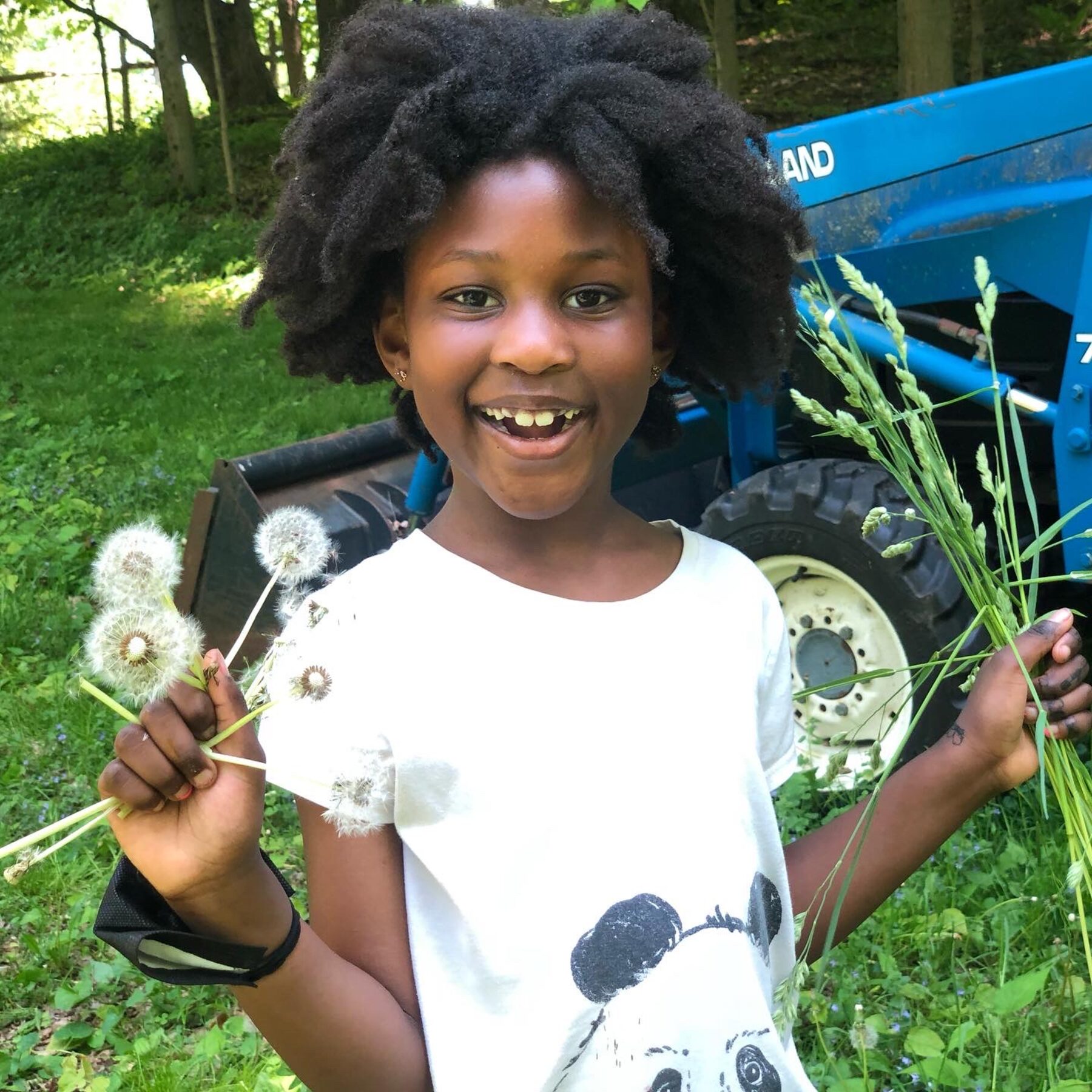
For children experiencing adversity and systemic inequality, research increasingly shows that regular access to restorative natural environments can serve as a powerful counterbalance—strengthening children’s well-being, connection, belonging, and capacity to thrive in school and in life.
Children gain regular access to nature through their public schools.
Bus
Click to flip
Bus
City to Sanctuary buses connects public school students to its partner nature sanctuaries.
Nature Sanctuary
Click to flip
Nature Sanctuary
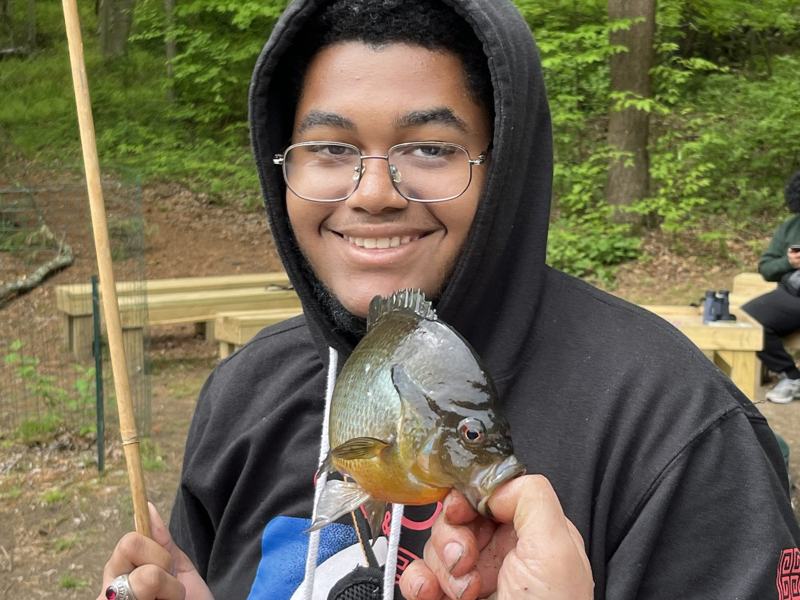
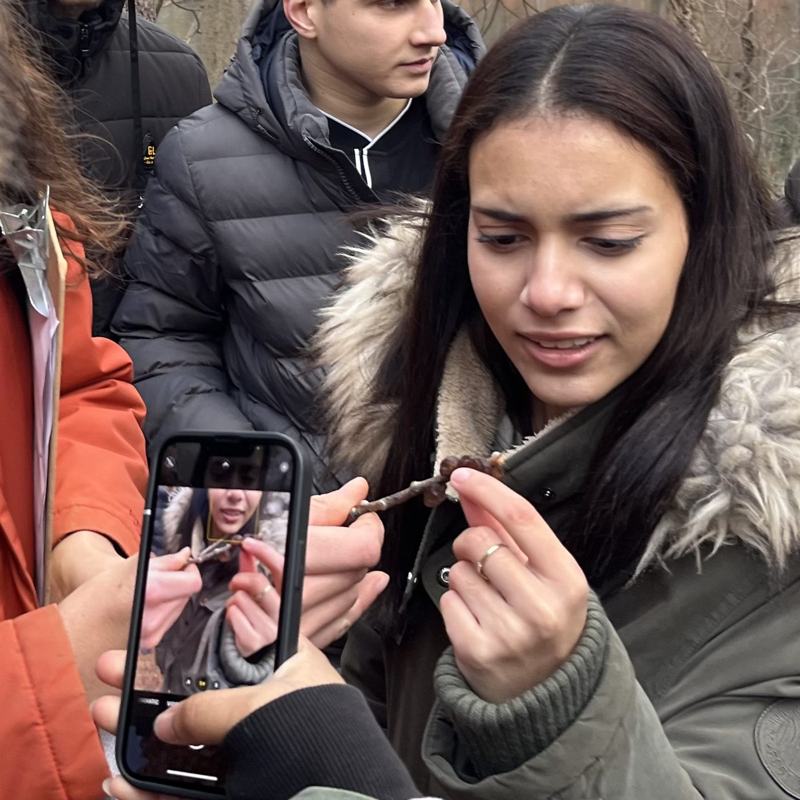
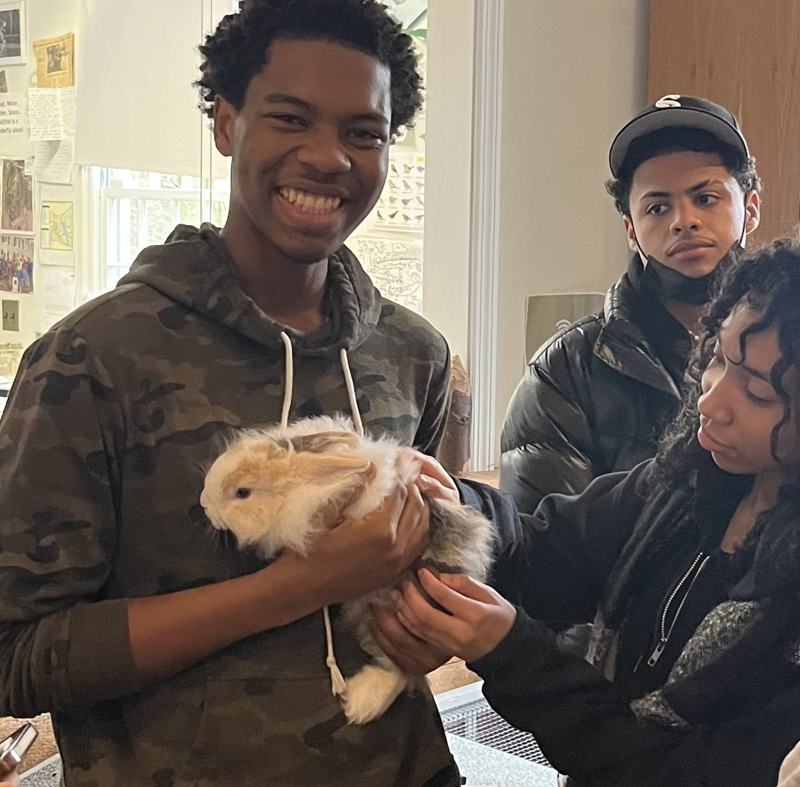
Restorative nature centers within easy reach of public schools become living classrooms, where naturalists guide immersive learning through exploration and discovery.
Month After Month
Click to flip
Month After Month
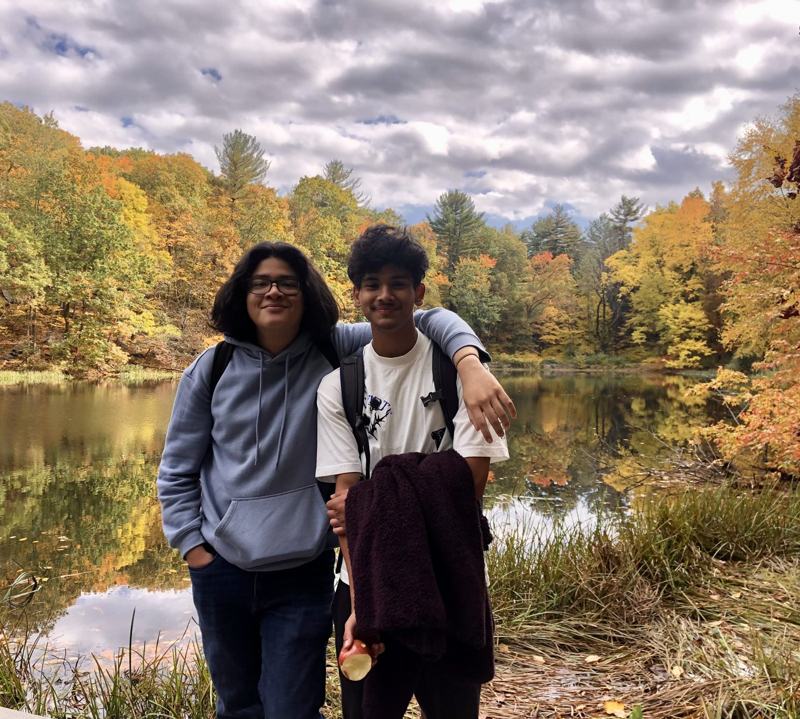
Students return to the same sanctuary nine months of the school year. Each visit builds connection and belonging—and confidence and curiosity that carry back to the classroom.
City to Sanctuary doesn’t create a new system. It connects one that already exists.
Students reported improvements in their well-being.
A Teacher
“This student isn’t in my class anymore but he made a point to come ask me for the permission slip on his own, without any reminder. He’s written down every trip date and remembers them all. He takes full responsibility for making sure he’s here each time, which I think is really telling.”
— Ms. Hanafy, Teacher, HSCJ
A Principal
“Our city students absolutely love hiking—it’s a chance for them to step outside their usual environment and explore something new. Working with the animals at the sanctuary deepens their empathy and sense of responsibility. We’ve seen real improvements in their academic skills too, as these experiences spark curiosity and strengthen critical thinking. It’s more than an outing; it’s an opportunity for growth in every sense.”
— Dr. Natasha Spann, Principal, PS 197, Harlem, NY
A Student
“It impacts my mental health in a very positive way and I love being around nature. There are no parks around where I live. It is a lot of fun walking around a forest and listening to the sound of silence.”
— Arlene, high school student, HDSJ
What Learning in Nature Looks Like
Click a moment to watch.
Building curiosity and confidenceLearning through direct experienceExploring life beneath the surfaceLearning how scientists study birds and migrationStrengthening community through shared joyFinding wonder along the trail
Three Years of Impact
2022–2025 · Harlem, NYC
197
Students
5
Elementary & High-School Cohort-Years
3
Years of Sustained Monthly Experiences
We set out to understand what happens when children don’t simply visit nature, but return to it month after month.
Sources of data include the Pre / Post Connection to Nature Index Survey (Cheng & Monroe, 2010), Student Voice, and Teacher & School Leadership Surveys.
Every Cohort Became More Connected to Nature
5 OF 5
cohorts improved
4 OF 5
Pre/Post cohort differences were statistically significant
Overall Connection-to-Nature scores increased from October to June in every cohort-year measured.
Pre (October)Post (June)
1.10
1.16
Elementary 2022–23
1.19
1.57
Elementary 2024–25
0.98
1.25
High School 2022–23
1.30
1.62
High School 2023–24
1.09
1.41
High School 2024–25
Connection to Nature Index
One Area Grew the Most.
Average Pre→Post change, across all 5 cohorts. Every area improved.
Empathy for Creatures
+0.06
Sense of Unity with Nature
+0.21
Enjoyment of Nature
+0.31
Development of Environmental Responsibility
+0.54
Nearly 3×
the average increase across the other three areas.
This goes beyond enjoying the outdoors—it suggests children are developing a stronger sense of responsibility toward the natural world.
Connection to Nature Index
Only 21% of children reach this benchmark. Our students did.
RSPB UK National Study
Children ages 8–12
21%
scored 1.5 or higher
City to Sanctuary
Elementary 2024–25
1.18Oct ’24
↓
1.57Jun ’25
Above the 1.5 benchmark
The RSPB study provides contextual reference data, not a matched comparison group.
Nature and Emotional Well-Being
Across three years of our City to Sanctuary pilot, several different indicators began pointing in the same direction: the positive impact that connecting to nature has on children’s emotional health.
Happiness
Agreement with “Being outdoors makes me happy” increased in 5 of 5 cohorts, with 3 of 5 reaching 100% agreement by year-end.
5OF5
cohorts moved positively
3OF5
reached 100% agreement
Coping
Across all three High School cohorts, substantially more students ended the year saying they turned to nature when they felt sad — increases ranging from 20 to 31 percentage points.
2022–2350% → 79%+29 pts
2023–2475% → 95%+20 pts
2024–2556% → 88%+31 pts
Peace & Calm
When students reflected on their experiences in nature, feelings of peace and calm were the most frequently reported.
34%
of substantive High School responses to well-being/emotion questions reflected peace or calm.
Most frequently expressed well-being theme.
What Students Told Us
“Nature is a peaceful environment where you can sit and reflect, without all the distractions.”
“It made me have a clear mind out for coming exams and made me feel peaceful.”
“The sanctuary taught me to be more at peace with nature, be more at peace in my surroundings.”
These quotations illustrate patterns identified through qualitative analysis of High School for Climate Justice students’ open-ended responses, not isolated testimonials.
A Closer Look
Sometimes, One Child Tells the Story
Nile was 16 and known at school for his challenging behavior—missing assignments, struggling in class, and needing significant support from his teachers.
But at the sanctuary, his teachers saw a different Nile.
Engaged. Curious. Kind. Responsible. Happy.
For two years, he never missed a sanctuary visit. He arrived early, permission slip in hand, found the perfect walking stick before each hike, and returned to favorite places along the trail where he could step away, sit quietly, and imagine.
When asked why he came every month, his answer was simple:
School leaders strongly agreed City to Sanctuary positively impacted their students
ALL
School leaders strongly agreed they would recommend City to Sanctuary to other principals
Teachers agreed that students experienced:
Belonging & Connection to NatureSocial-Emotional GrowthGreater Motivation, Focus & EngagementImprovement Among Students Who Typically Struggle with Behavior, Attendance, or Focus
2025 stakeholder surveys were collected from the two pilot participating schools’ leaders and teachers, reflecting on their cumulative experience with City to Sanctuary from 2022–2025.
What Three Years Taught Us
Connection Grew.
Every cohort ended the year more connected to nature.
Nature Began to Function Differently in Children’s Lives.
Students increasingly associated it with happiness, calm, reflection, and emotional coping.
Schools Saw Value — and Feasibility.
Educators reported positive student impact while also describing the model as manageable to implement.
From Evidence to Demand
The pilot showed what can happen when children return to nature month after month.
Then something else happened. Schools wanted more.
Momentum Is Building
Following three years of evidence, demand from schools is growing.
Click each card.
School Districts 4, 5, and 6Harlem and Washington Heights
What began with one school has grown into demand from 3 school districts in Harlem and Washington Heights, serving the highest-need students in NYC.
▼
20 SchoolsTitle I public schools
10 Title I public schools are already enrolled for the 2026–2027 school year, with 10 more on the waiting list.
▼
800+ StudentsWITH LEAST ACCESS TO NATURE
The majority of whom experience poverty, housing instability, and low levels of neighborhood safety—and have the least access to restorative natural spaces.
▼
And growing
Schools choose this because it aligns with student needs, delivers immediate impact on engagement, and fits real school constraints.
For the 2026–2027 school year, City to Sanctuary is launching its expansion in Districts 4, 5, and 6 in Upper Manhattan. Prioritizing Title I public schools and neighborhoods with limited access to nature ensures that the children who stand to benefit most are reached first.
What comes next depends on the people who choose to make it possible.
The Schools Are Ready
Title I public schools enrolled for the 2026–2027 school year
Lexington Academy (PS 72)
Mary McLeod Bethune (PS 92)
High School for Climate Justice
Central Park East II
John B. Russwurm (PS 197)
Park East High School
Harriet Tubman (PS 154)
Washington Heights Academy (PS/IS 366)
Fred R Moore (PS 133)
Sustainability
How We Got Here
A pilot built through shared commitment.
From 2022–2025, City to Sanctuary was made possible through:
School Contributions
Schools invested in bringing the program to their students.
Philanthropic Support
Funders helped cover costs beyond what schools could contribute.
Volunteer Leadership
Volunteer time and expertise made the three-year pilot possible.
Together, they helped turn an idea into a tested model ready to grow.
No single school, donor, or funder carries the work alone.
Year 1 builds the foundation while a growing community of monthly givers helps sustain the work over time.
It Takes All of Us
SCHOOLS
make it accessible
SANCTUARIES
make it immersive
COMMUNITY
make it sustainable
INDIVIDUAL SUPPORTERS
make growth possible
Together, we make nature part of every child’s education.
With Gratitude
This work is made possible together.
City to Sanctuary’s three-year pilot grew through the belief, commitment, and generosity of the schools, funders, partners, educators, and community who helped bring it to life.
Funding Partner
The Simeon and Jean H. Locke Foundation
Partner Schools
High School for Climate Justice P.S. 197 John B. Russwurm
Sanctuary Partner
Westmoreland Sanctuary
And With Deep Appreciation To
Our educators, school leaders, naturalists, board members, volunteers, community partners, and the students and families at the heart of this work.
Thank you for believing that every child deserves the opportunity to build a lasting connection with the natural world.
From one child to an entire city, shape what comes next.
We are bringing together a small group of people who believe regular access to nature should be part of every child’s education—not determined by ZIP code.
Let’s Make What Comes Next Possible.
Three years of evidence show what’s possible when children return to nature month after month. City to Sanctuary is bringing together individuals who want to help bring that experience to more children.
Support a Child
Help one child experience nature every month throughout the school year.
Support a Class
Help a class return to nature month after month.
Support a Grade
Help an entire grade experience regular, year-round access to nature.
Create a Lasting Legacy
Make a transformational investment in the New York City initiative, with the opportunity to name it in honor of yourself or someone meaningful to you.
Imagine a New York City where every child—regardless of ZIP code, neighborhood, or family income—has equitable access to the conditions that support healthy development.
New York City has long invested in the conditions children need to thrive within its public schools. We build safe schools, support caring educators, provide nutritious meals, improve air quality, and create green schoolyards because we understand that children's environments shape their development. Today, a growing body of scientific research points to another essential condition that deserves the same public commitment: regular, sustained access to restorative natural environments.
The Problem
Research conducted across countries, educational settings, and student age groups consistently shows that nature may be one of the most overlooked—yet most impactful—ways to support children's healthy development. It is particularly vital for children growing up in low-income urban communities. Yet for thousands of students attending New York City's Title I public schools in historically under-resourced neighborhoods, unfortunately, that essential developmental condition remains largely out of reach. The result is an inequity in access to one of the very foundations of childhood development. This is not simply an environmental issue—it is about educational equity, public health, environmental, and social justice.
Why Now
Regular, sustained access to nature supports children's healthy development in profound ways. Research shows that its benefits extend far beyond recreation, strengthening physical, mental, social, and emotional well-being, with measurable effects that reach even the cellular level.
New York City already possesses everything needed to make this possible: a world-class public school system, extraordinary nature centers within easy reach of public schools, an extensive public school bus system, and Mayor Mamdani's commitment to creating healthier schools. What is missing is a citywide system that connects these existing assets into regular, sustained access to restorative natural environments as part of every child's public education.
The Solution
This proposal is presented by Friends of Pono, a New York City–based 501(c)(3) nonprofit organization that has spent more than 14 years developing, refining, and implementing models that make regular access to nature an integral part of children's education.
City to Sanctuary is Friends of Pono's research-based, evidence-informed initiative that partners with public schools and environmental education centers, where protected natural spaces become living classrooms. Through these partnerships, students participate in monthly, immersive learning experiences in restorative natural environments, with instruction aligned to New York State learning standards.
Rather than treating nature as an occasional field trip, City to Sanctuary makes regular access to nature a continuous part of children's educational experience. Students return throughout the school year to the same nature sanctuary, which gradually becomes their place—a familiar environment where they build knowledge of and connection to the natural world, while developing the comfort, confidence, curiosity, and sense of belonging that carry back into the classroom.
Designed to work within the existing public school system, the City to Sanctuary is accessible, affordable, and simple to implement. It fits the realities of public education—real budgets, real schedules, real staffing, and the urgent developmental needs of today's children.
Proof of Concept
Over the past three years, City to Sanctuary has demonstrated that regular access to nature can become a practical and scalable component of public education. Through a successful pilot serving 200 students from two Title I public schools in Harlem, 98% of participating students reported improvements in their well-being, while 100% demonstrated growth in their knowledge of, empathy for, and care for the natural world.
Teachers observed these changes in the classroom as well. Eighty-three percent reported higher student motivation and focus, 92% reported stronger social-emotional skills, and 84% observed meaningful improvements in students who typically struggled with behavior or attention. Every participating principal reported improved student attendance and a lasting positive impact on their school community.
The strongest evidence, however, comes from the schools themselves. Schools are choosing City to Sanctuary because they see a model that aligns with their students' needs, delivers immediate improvements in student engagement and well-being, and fits within the realities of public education. As a result, every participating school has chosen to continue the program for a fourth consecutive year, with several expanding participation to additional classrooms.
What began with a single pilot cohort has grown into demand from more than ten Title I public schools serving hundreds of students across Harlem during the 2026–2027 school year. This growth sends a clear message: New York City schools are ready for practical, turnkey models that make regular access to nature an essential part of healthy child development.
Reimagining Public Education
New York City can become the first city in the United States to recognize regular, year-round access to restorative natural environments as essential public infrastructure for healthy child development.
By making nature a foundational component of public education, New York City can establish a new national model for educational equity, child well-being, environmental justice, and healthy child development—creating a future in which every child's opportunity to thrive is no longer determined by their ZIP code.
About City to Sanctuary
City to Sanctuary is an initiative of Friends of Pono, a New York City–based 501(c)(3) nonprofit organization founded in 2012. Friends of Pono advances child well-being, healthy development, and educational opportunity by supporting learner-centered and outdoor environmental education programs for students in Title I urban public schools. The organization develops and scales evidence-informed, community-rooted programs that connect children in underserved communities with restorative natural environments to support healthy development, educational success, and environmental stewardship.
Nature Is Essential Public Education Infrastructure
A Proposal for Integrating Regular, Year-Round Access to Nature into New York City's Public Schools
Table of Contents
Part I. The Case for Change — Why Nature Belongs in Public Education
Part II. A Practical Solution — The City to Sanctuary Model
Part III. Scaling the Vision — From Pilot to Citywide Implementation
Part IV. A Partnership with New York City — A Shared Investment in Children's Healthy Development
Part V. A Vision for New York City's Children — Leading a National Model for Healthy Child Development
Part I — The Case for Change
Why Nature Belongs in Public Education
1. Nature as an Essential Condition for Healthy Child Development
Children's development is shaped not only by what they are taught, but also by the environments in which they grow, learn, and play. Decades of research across education, neuroscience, psychology, medicine, and public health have demonstrated that the conditions surrounding children profoundly influence their physical, cognitive, social, and emotional development.
Public education has long reflected this understanding. Schools do far more than deliver academic instruction. They create many of the conditions children need to thrive by providing safe learning environments, nurturing caring relationships with adults, offering nutritious meals, promoting physical activity, improving air quality, and increasingly investing in greener schoolyards and healthier school environments. These investments recognize a simple but fundamental principle: children's environments matter because they shape children's development.
Today, a growing body of scientific evidence points to another essential developmental condition that deserves the same public commitment: regular, year-round access to restorative natural environments. While access to nature has often been viewed as an environmental amenity or an educational enrichment, research increasingly suggests that it should also be understood as a foundational condition for healthy child development.
Over the past two decades, research across neuroscience, psychology, education, environmental health, medicine, and public health has consistently demonstrated that regular access to nature supports healthy development from the earliest stages of life through adulthood.
This influence begins at the biological level. Emerging research shows that exposure to biodiverse natural environments shapes the microbial communities that influence immune regulation, inflammation, and stress responses. These interactions contribute to healthier physical and mental functioning, suggesting that nature supports development not only through children's experiences, but also through measurable biological processes (Dawud, Holbrook, & Lowry, 2022; Frank et al., 2018; Reber et al., 2017).
As children grow, the benefits extend across multiple dimensions of development. Studies consistently associate regular contact with nature and stronger connections to the natural world with greater social and emotional competence, stronger self-awareness and self-management, healthier relationships, increased confidence, and more positive youth development. Educators likewise report that meaningful experiences in nature foster children's engagement, creativity, resilience, self-esteem, stress recovery, and sense of belonging—qualities that support both learning and healthy development in school and beyond (Bowers, Larson, & Parry, 2021; Lanza et al., 2022; Maller, 2009).
Perhaps most remarkably, the benefits of access to nature appear to begin even before birth. Large international studies have found that greater maternal exposure to green space during pregnancy is associated with healthier birth outcomes and biological differences related to infant brain development and stress regulation, suggesting that nature may influence developmental trajectories from the very beginning of life (Cserbik et al., 2025; Gascon et al., 2022).
These developmental advantages continue across the lifespan. Longitudinal studies and systematic reviews consistently associate sustained exposure to nature with better mental health, lower stress, improved physical health, and greater overall well-being throughout adulthood (Li et al., 2021; Twohig-Bennett & Jones, 2018). Even within cities, greater neighborhood tree cover has been associated with substantially better self-reported health, while large population-based studies and meta-analyses have found that people living in greener environments experience a lower risk of premature death from all causes (Kardan et al., 2015; Crouse et al., 2017; James et al., 2016; Rojas-Rueda et al., 2019).
Taken together, this growing body of evidence suggests that regular access to restorative natural environments is not simply a recreational amenity or an occasional educational opportunity. It is an important contributor to healthy child development across the life course. If public education is committed to providing every child with the conditions that support learning, health, and well-being, then regular, year-round access to restorative natural environments should be recognized as part of that commitment.
2. An Issue of Educational Equity
Although all children benefit from regular access to nature, not all children have equal opportunities to experience it. For many students, access to restorative natural environments is shaped by where they live, the resources available in their neighborhoods, and the opportunities their schools are able to provide. As a result, access to one of the conditions that supports healthy child development is distributed unequally.
Nowhere is this inequity more evident than in New York City's highest-need communities. Harlem's Community School District 5, where City to Sanctuary's work began, illustrates both the challenge and the opportunity. The district serves predominantly Black and Latino students, has one of the city's highest concentrations of economic need, and a substantial proportion of students experience housing instability. Many children have limited opportunities for regular, meaningful contact with restorative natural environments despite living in one of the world's most resource-rich cities.
This inequity is not simply about proximity to parks or green spaces. It is about equitable access to the kinds of sustained, immersive experiences in nature that research suggests support healthy development. While some children routinely spend weekends exploring forests, hiking trails, beaches, or nature preserves, many others encounter nature only occasionally through neighborhood parks or infrequent school field trips. The result is not merely a difference in recreational opportunity, but a difference in access to an important developmental condition.
Public education has long existed to reduce inequities that arise from children's circumstances rather than their potential. Schools provide nutritious meals when families face food insecurity, counseling when students need emotional support, and transportation when distance creates barriers to learning. If regular access to restorative natural environments is also an important contributor to healthy child development, then ensuring that all children have meaningful opportunities to experience nature belongs within that same commitment to educational equity.
Viewed through this lens, expanding regular access to nature is not an additional responsibility for public education—it is an opportunity to strengthen one that already exists: ensuring that every child, regardless of ZIP code or family income, has equitable access to the conditions they need to learn, grow, and thrive.
3. Why New York City, Why Now
New York City has long recognized that children's ability to learn depends on the conditions in which they develop, investing in initiatives that support their health, well-being, and learning beyond the classroom. Today, growing scientific evidence suggests that regular, year-round access to restorative natural environments deserves to be recognized as part of that same commitment.
At the same time, New York is uniquely positioned to lead. Few cities possess the combination of world-class public schools, renowned parks and natural areas, environmental organizations, and civic leadership necessary to reimagine how nature can become part of public education. The resources already exist; what is needed is a coordinated vision that brings them together in service of children.
This moment also reflects a broader shift in how cities think about health, education, and equity. Increasingly, policymakers recognize that children's well-being is shaped not only by classrooms. As cities invest in climate resilience, public health, and educational innovation, there is an opportunity to recognize regular access to nature as part of the infrastructure that supports healthy child development.
By taking that step, New York would not simply expand outdoor learning opportunities. It would establish a new model of public education—one that recognizes regular, year-round access to restorative natural environments as an essential part of helping every child learn, grow, and thrive. In doing so, New York has the opportunity to become the first major city to intentionally integrate nature into public education as a foundational developmental resource, offering a model that other cities can adapt and build upon.
Part II — A Practical Solution
The City to Sanctuary Model
1. Nature as Essential Public Infrastructure
If regular access to restorative natural environments is an essential condition for healthy child development, then ensuring equitable access to nature becomes a matter of public infrastructure. Just as cities invest in schools, libraries, transportation, parks, and public health systems to provide the conditions people need to thrive, they can also invest in ensuring that every child has regular, year-round access to nature as part of public education.
Viewing nature as essential public infrastructure shifts the conversation from occasional outdoor learning to equitable access. Rather than treating nature as an enrichment opportunity available to some schools, this proposal recognizes regular access to restorative natural environments as part of the educational conditions every child deserves.
The question, then, is not whether schools should bring children into nature, but how New York City can make regular, meaningful access to nature an integrated and sustainable part of public education.
2. The City to Sanctuary Model
City to Sanctuary is a program of Friends of Pono, a New York City-based nonprofit 501(c)(3) organization founded in 2012 to advance innovative approaches to child development, education, and equitable access to nature. Building on more than 14 years of educational practice and a growing body of research, City to Sanctuary was created to demonstrate one practical way regular, year-round access to nature can become part of public education.
The model partners with Title I public schools and protected natural spaces to provide students with 9 monthly, year-round immersive learning experiences that support healthy child development while reinforcing academic learning. Students participate in nine monthly immersive learning days throughout the school year, returning to the same sanctuary each month to build familiarity with the landscape, observe seasonal change, and develop a lasting relationship with the natural world. Rather than offering isolated field trips, the model creates a continuous learning experience that unfolds across the seasons.
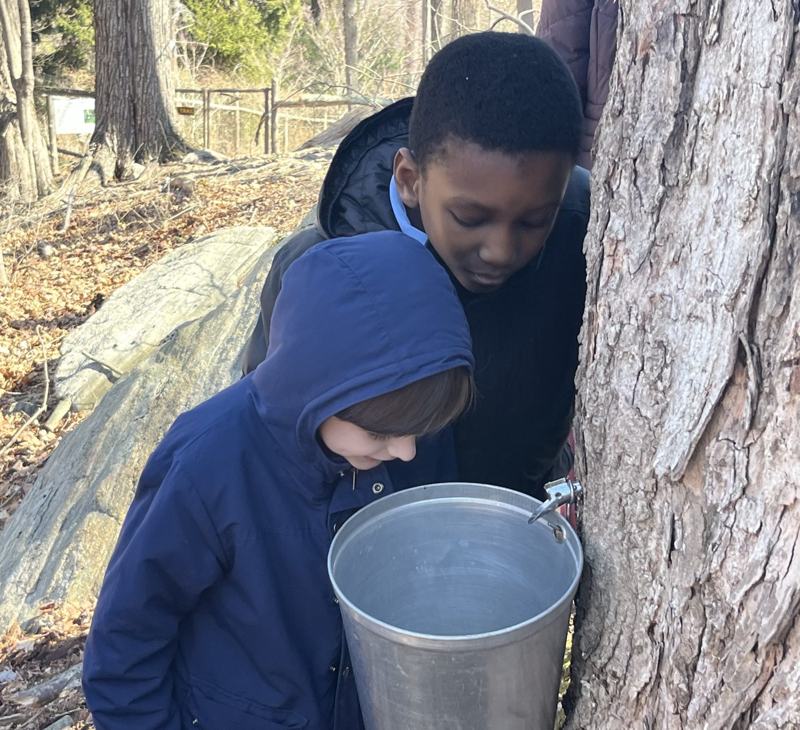
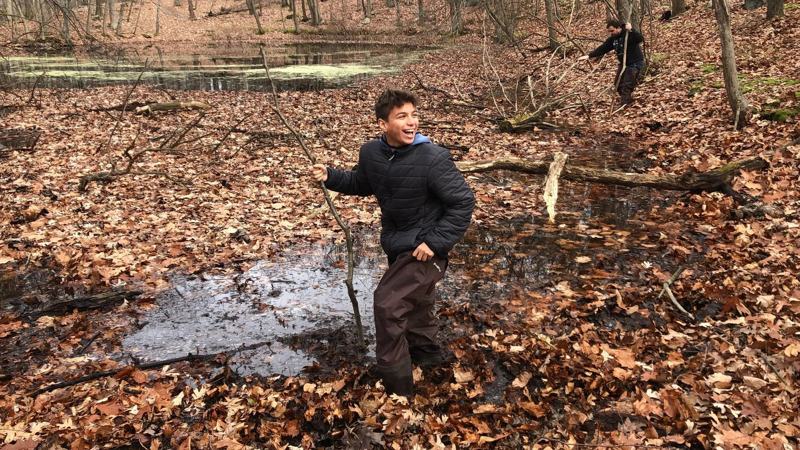
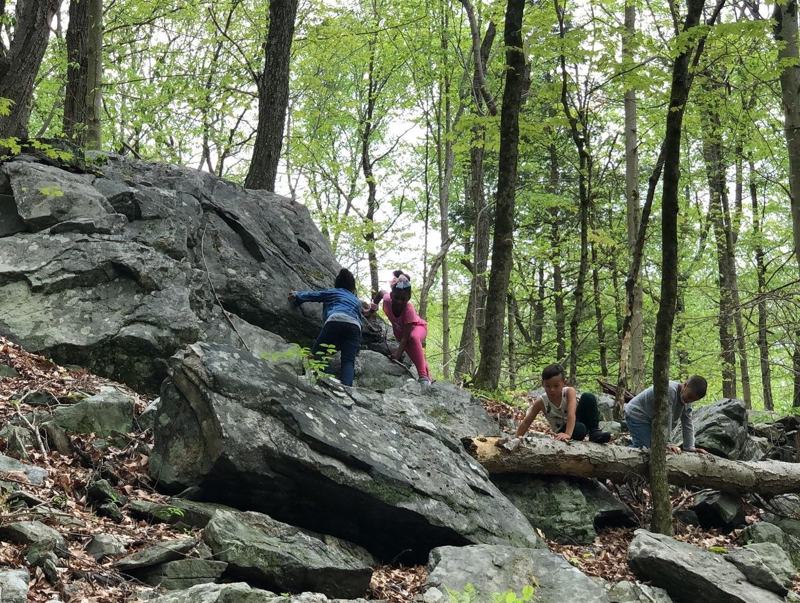
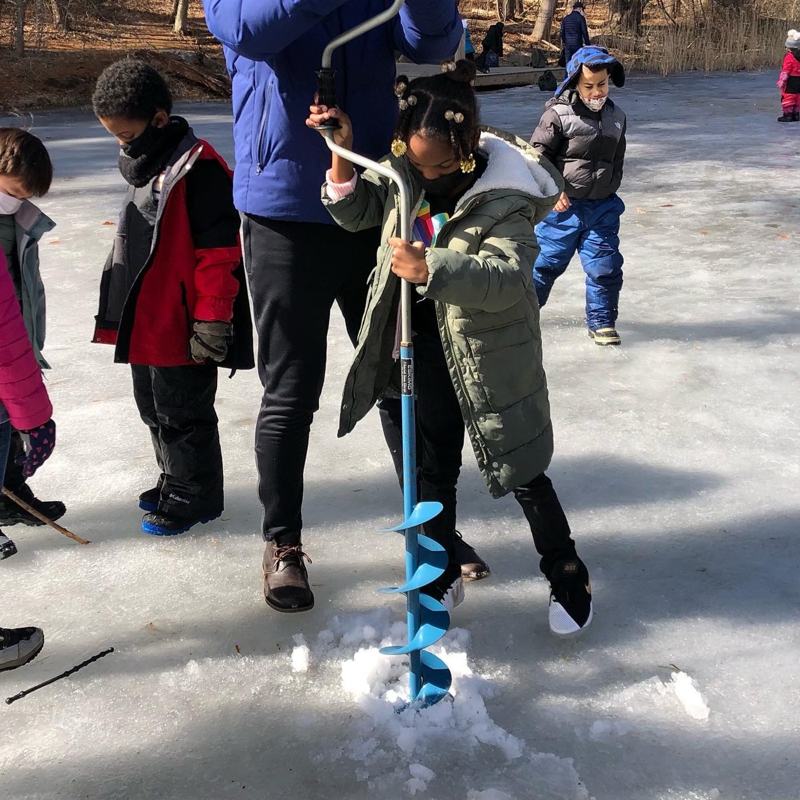
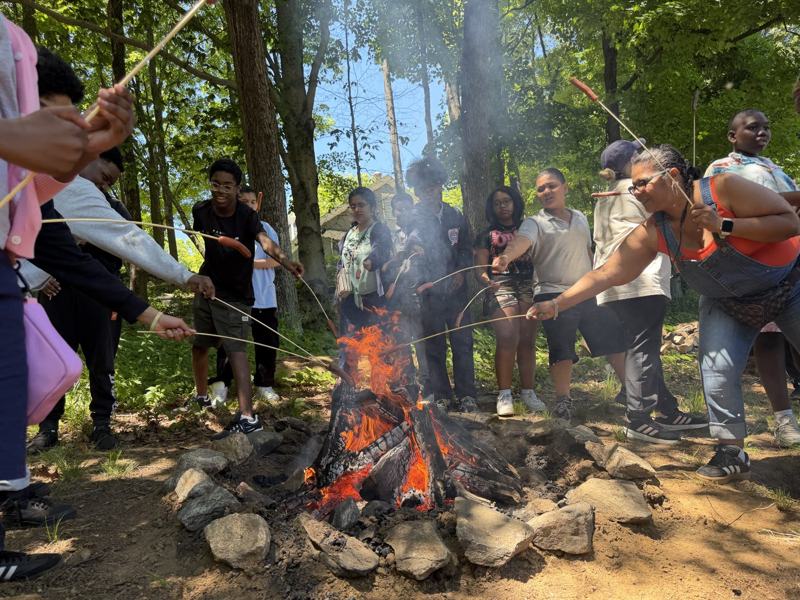
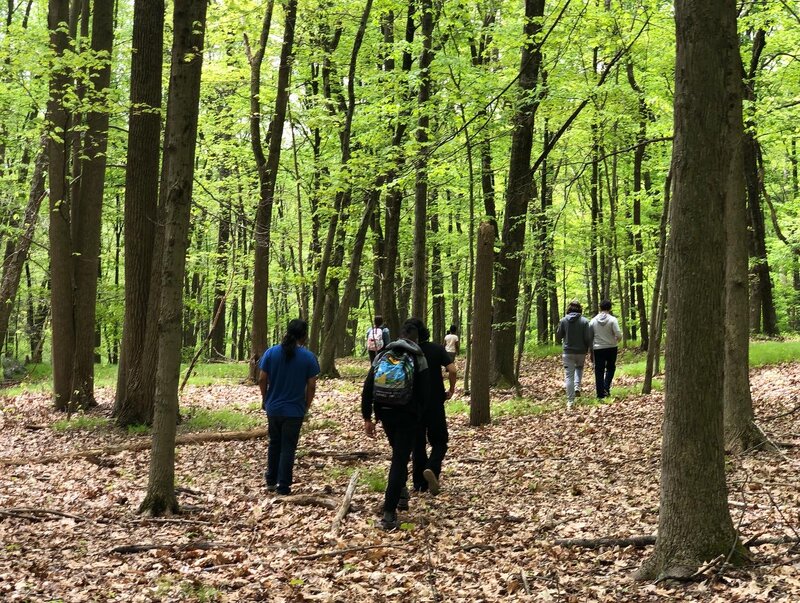
Learning is rooted in healthy child development and guided by an inquiry-based approach that encourages students to ask questions, investigate, explore, and make discoveries through direct experience. Guided by experienced naturalists and environmental educators, students engage in authentic outdoor experiences such as meeting and caring for animals, hiking forest trails, exploring ponds and streams, tracking wildlife, bird banding, building shelters and fires, tapping maple trees, ice fishing, cooking over open fires, and observing seasonal ecological changes. On inclement weather days, learning continues indoors through activities such as meeting animals, exploring skulls and furs, and other hands-on environmental investigations.
Each year's learning follows the rhythm of the seasons. Students return to familiar places month after month to witness bird migration in the fall, explore pond ecology, discover fungi and decomposers, learn winter survival skills, tap maple trees in early spring, investigate vernal pools bursting with life, and observe the return of birds and other wildlife before ending the year by cooking over open fires. This continuity allows children not simply to visit nature, but to develop an enduring relationship with a place and a deeper understanding of the living world.
The educational experience is intentionally aligned with New York State's science learning standards, enabling classroom instruction and outdoor experiences to reinforce one another while preserving the curiosity, exploration, and wonder that make learning in nature so powerful.
3. A Partnership Model for New York City
The City to Sanctuary model is designed around three guiding principles: it is accessible, affordable, and simple to implement. Rather than creating new infrastructure, the model builds upon assets New York City already possesses—including public schools, protected natural spaces, experienced environmental educators, community organizations, and the City's existing transportation system. City to Sanctuary coordinates partnerships, scheduling, educational planning, transportation, logistics, safety preparation, materials, and ongoing collaboration with schools, allowing educators to focus on teaching while making regular, year-round access to nature both practical and sustainable. By removing the logistical barriers that often prevent schools from providing meaningful outdoor learning, the model makes equitable access to nature achievable at scale.
Accessible
New York City already has the resources needed to make regular access to nature part of public education. Schools, protected natural spaces, environmental educators, community organizations, and an established transportation system provide the foundation for implementation. The opportunity is not to build new infrastructure, but to better connect the assets that already exist.
Affordable
The model has already demonstrated its financial feasibility. Under the current model, participating schools invest $5,000 annually to provide approximately 40 students (two classes) with nine monthly sanctuary experiences throughout the school year. At a larger scale—serving 20 schools and approximately 800 students—the model can be delivered for approximately $555 per student per year, assuming participating schools have access to New York City's existing school transportation system. These figures demonstrate that regular, year-round access to nature can be expanded without major new public investment.
Simple to Implement
Schools are already managing increasing student needs, limited resources, staffing challenges, and countless competing priorities. The City to Sanctuary model is intentionally designed to remove—not add to—that burden. By coordinating implementation from start to finish, City to Sanctuary enables schools to participate with minimal additional responsibilities. Leveraging transportation infrastructure the City already operates, the model allows New York to significantly expand children's access to nature while keeping implementation straightforward, affordable, and sustainable.
4. High Impact Through Smart Design
The City to Sanctuary model has demonstrated meaningful developmental and educational outcomes because it is intentionally designed around three principles that distinguish it from traditional outdoor education. Together, these design principles make regular, year-round access to nature both impactful for children and practical for schools.
Regular, Not Occasional
Students return to the same sanctuary nine times throughout the school year rather than participating in isolated field trips. This continuity allows them to build familiarity with a place, observe seasonal change, develop meaningful relationships with the natural world, and deepen their learning over time. By transforming occasional visits into an ongoing educational experience, the model fosters the sustained connection that research suggests is most beneficial for healthy child development.
Removes Barriers Rather Than Creating Them
Many schools recognize the value of outdoor learning but lack the time, staffing, funding, or logistical capacity to organize it on a regular basis. The City to Sanctuary model is designed to remove these barriers rather than add to them. By coordinating partnerships, transportation, scheduling, logistics, educational planning, and implementation, City to Sanctuary enables schools to participate without taking on significant additional responsibilities.
Leverages Existing Assets
Rather than creating new infrastructure, the model brings together resources that already exist—including public schools, protected natural spaces, environmental educators, community organizations, and New York City's transportation system—into a coordinated partnership. This approach keeps implementation practical, cost-effective, and readily scalable while maximizing the value of existing public and community investments.
Together, these design principles demonstrate that regular, year-round access to nature is not only educationally meaningful, but also feasible to implement at scale within New York City's public school system.
Part III — Scaling the Vision
From Pilot to Citywide Implementation
Expanding regular, year-round access to nature across New York City requires more than a successful pilot—it requires a strategy that can grow while maintaining quality, equity, and long-term sustainability. The City to Sanctuary model is designed to expand thoughtfully, building on experience and evidence while ensuring that implementation remains equitable, intentional, and financially sustainable.
1. An Equitable Expansion Strategy
Implementation should begin where the need is greatest. For the 2026–2027 school year, City to Sanctuary is launching its expansion in Districts 4, 5, and 6 in Upper Manhattan, where many children face some of the City's greatest developmental, environmental, and socioeconomic challenges. Prioritizing Title I public schools and neighborhoods with limited access to nature ensures that the children who stand to benefit most are reached first.
2. An Intentional Growth Strategy
Expansion should occur in phases, beginning with a focused implementation in Districts 4, 5, and 6. Data, experience, and continuous evaluation will be used to refine the model before expanding to additional schools and districts. This deliberate approach supports quality, continuous improvement, and long-term success.
As the initiative grows from 20 to 40 and then 60 schools over its first three years, expansion will remain proportional and increasingly cost-effective. Investments made during the initial implementation will create efficiencies that enable additional schools to be added with lower incremental costs while maintaining program quality.
3. A Sustainable Funding Strategy
Long-term success depends on shared responsibility. The financial model is intentionally designed as a shared investment, with New York City, participating schools, philanthropy, and community members each contributing to make regular, year-round access to nature both scalable and financially resilient.
A key component of this approach is the City to Sanctuary Community Monthly Givers Campaign, which invites individuals to make recurring monthly contributions that provide a source of community-based funding. Together, these complementary funding streams reduce reliance on any single source of funding and support the model's long-term sustainability.
Part IV — A Partnership with New York City
A Shared Investment in Children's Healthy Development
City to Sanctuary proposes a public-private partnership with New York City to make regular, year-round access to nature part of public education for children attending Title I public schools.
1. The Proposal
City to Sanctuary proposes partnering with New York City to:
Launch implementation in Districts 4, 5, and 6.
Support implementation over an initial three-year period.
Evaluate outcomes annually and use findings to strengthen the model before expanding to additional schools and districts.
2. New York City's Contribution
New York City would serve as the public-sector partner by providing:
Transportation through the Department of Education's existing school bus system (20 round-trip bus rides per month from October to June).
A $250,000 annual public investment toward implementation.
Strategic partnership and collaboration to support the implementation of regular, year-round access to nature as part of public education for children attending Title I public schools.
3. City to Sanctuary's Contribution
City to Sanctuary would serve as the implementation partner by providing:
Program design and management.
Partnerships with participating sanctuaries.
Curriculum integration aligned with New York State learning standards.
Naturalists and environmental educators.
Scheduling and logistical coordination.
Educational materials and program support.
Program evaluation and continuous improvement.
4. Year 1 Implementation Budget
Expenses
Annual Cost
Personnel
$370,000
Program Costs
$21,600
Marketing
$12,000
Fundraising/Campaigning
$24,000
Materials
$5,000
Miscellaneous
$11,400
Total Expenses
$444,000
Revenue
Annual Amount
Partner School Contributions (20 schools × $5,000)
$100,000
New York City Public Investment
$250,000
Community Monthly Givers
$94,000
Total Revenue
$444,000
This implementation budget supports approximately 800 students across 20 Title I public schools, representing an annual cost of approximately $555 per student, assuming participating schools have access to New York City's existing school transportation system.
Together, New York City and City to Sanctuary can demonstrate that regular, year-round access to nature is not an enrichment opportunity, but an essential part of a healthy, equitable public education.
Part V — A Vision for New York City's Children
Leading a National Model for Healthy Child Development
Imagine a New York City where every child, regardless of ZIP code, has regular, year-round access to the restorative power of nature as part of their public education.
Imagine students who know the changing seasons not from textbooks alone, but from returning month after month to the same natural place. Imagine children who develop curiosity, confidence, resilience, and a lasting sense of belonging through meaningful relationships with the natural world.
This vision is both practical and achievable. New York City already has the schools, the parks, the environmental organizations, the transportation system, and the community partners needed to make it a reality. What is needed now is the commitment to connect these assets through a shared vision for children's healthy development.
By partnering with City to Sanctuary, New York City has the opportunity to become a national leader in reimagining public education—demonstrating that regular access to nature is not an occasional enrichment opportunity, but an essential part of a healthy childhood and a high-quality education.
Every child deserves the opportunity to grow, learn, and thrive in relationship with the natural world.
Together, we can make that opportunity part of every child's educational journey.